Nintendo Entertainment System · Fighting
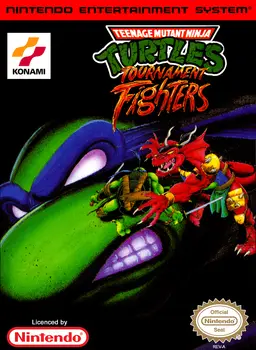
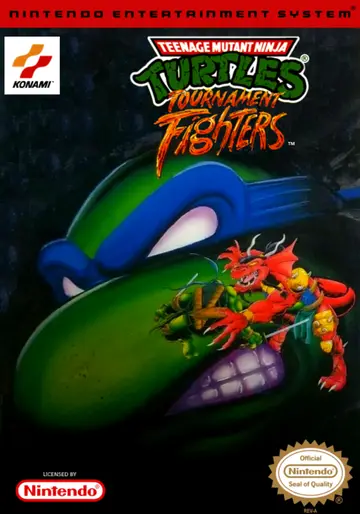
Teenage Mutant Ninja Turtles: Tournament Fighters
| System | Nintendo Entertainment System |
|---|---|
| Released | 1994 |
| Genre | Fighting |
| Developer | Konami |
| Publisher | Konami |
| Players | 1–2 players |
| Commitment | Quick session (Under an hour, or endless arcade fun) |
| Series | Teenage Mutant Ninja Turtles |
| Legacy | Deep cut · legacy score 1 |
Developed by Konami, Teenage Mutant Ninja Turtles: Tournament Fighters arrived on the Nintendo Entertainment System in 1994 as a fighting game.
It landed about 9 years into the NES's life. Other notable NES releases from 1994 include Mega Man 6, Wario's Woods and Alfred Chicken. Among the 12 NES fighting games in our database, it ranks #11 by legacy score.
It is part of the Teenage Mutant Ninja Turtles series; on the NES you can also try Teenage Mutant Ninja Turtles, Teenage Mutant Ninja Turtles III: The Manhattan Project and Teenage Mutant Ninja Turtles II: The Arcade Game. The series also appears on other systems with Teenage Mutant Ninja Turtles: Fall of the Foot Clan (Game Boy) and Teenage Mutant Ninja Turtles: Turtles in Time (SNES). Konami also made Metal Gear, Castlevania and Castlevania III: Dracula's Curse for the NES.
Teenage Mutant Ninja Turtles: Tournament Fighters supports up to 2 players, whether that means taking turns or going head-to-head.
Pick it if…
- you want to fight, blast and test your reflexes
- you have time for a quick session (under an hour, or endless arcade fun)
- you have a friend to play against
- you've played the NES hits and want something less obvious
Maybe skip it if…
- you prefer story-driven games or have no one to play against
What playing Teenage Mutant Ninja Turtles: Tournament Fighters is like
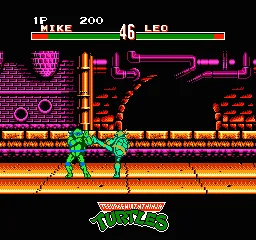
Fighting games pit two characters against each other in short one-on-one bouts. Depth comes from learning special moves, combos and each character's strengths.
Tip for newcomers: Pick one character and learn their basic special moves before branching out. Fighting games are at their best against a friend at a similar skill level.
Teenage Mutant Ninja Turtles: Tournament Fighters cheats & codes
31 codes on file (Game Genie, Emulator memory codes). Here are a few Game Genie codes to start with:
| Infinite Time | GXKVKXVK |
|---|---|
| Both Players Start With 1/3 Energy | AUXAGAEL |
| Both Players Can Select Ultra Strength (Ignore Strength Meter And Keep Pushing To The Right) | NYUEESPYE |
| You Can Select Any Character In Story Mode | YAVAZLGA |
| Infinite Continues | OKKEZTVG |
| Whoever Gets The First Hit Wins The Round | PEXAGAEL |
See all Teenage Mutant Ninja Turtles: Tournament Fighters cheats
Teenage Mutant Ninja Turtles: Tournament Fighters walkthroughs & guides
Stuck, or want to go deeper? These trusted sites have full walkthroughs, completion times and more for Teenage Mutant Ninja Turtles: Tournament Fighters.
If you like Teenage Mutant Ninja Turtles: Tournament Fighters, the Matrix also picks…
Yie Ar Kung-Fu Classic
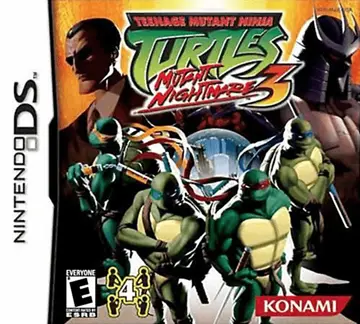
Teenage Mutant Ninja Turtles 3: Mutant Nightmare Deep cut Co-op
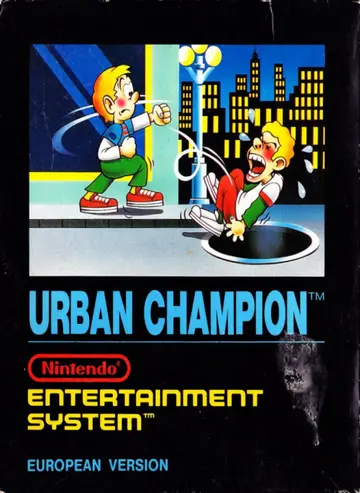
Urban Champion Classic

Playing NES games today
NES games are short on paper but often famously tough, so expect to replay levels and learn patterns. Many first-party titles are available through Nintendo Switch Online, original cartridges remain easy to find, and you can play backups of games you own in an emulator such as Rec0m88.
Teenage Mutant Ninja Turtles: Tournament Fighters FAQ
When did Teenage Mutant Ninja Turtles: Tournament Fighters come out on the NES?
Teenage Mutant Ninja Turtles: Tournament Fighters was released for the Nintendo Entertainment System in 1994.
Who made Teenage Mutant Ninja Turtles: Tournament Fighters?
It was developed by Konami.
Is Teenage Mutant Ninja Turtles: Tournament Fighters multiplayer?
Yes. Teenage Mutant Ninja Turtles: Tournament Fighters supports up to 2 players.
How long does Teenage Mutant Ninja Turtles: Tournament Fighters take to play?
As a fighting game, Teenage Mutant Ninja Turtles: Tournament Fighters typically falls into the "Quick session" category: under an hour, or endless arcade fun. Your time will vary with skill and how much you explore.
Facts on this page are compiled from the open libretro database and Wikidata; "legacy score" reflects how widely a game is documented across Wikipedia's language editions. Spotted an error? Let us know.