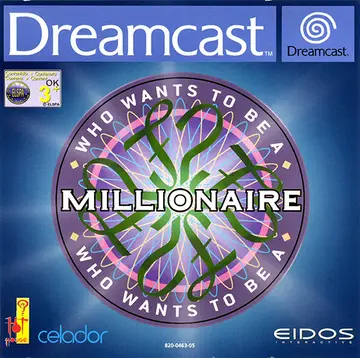
Sega Dreamcast · retro
Who Wants To Be A Millionaire
Deep cut
| System | Sega Dreamcast |
|---|---|
| Released | 2000 (originally 1999) |
| Developer | Jellyvision |
| Publisher | Eidos Interactive |
| Players | 1–2 players |
| Legacy | Deep cut · legacy score 2 |
Released for the Sega Dreamcast in 2000, Who Wants To Be A Millionaire is a retro game developed by Jellyvision and published by Eidos Interactive. This Dreamcast release is a port or adaptation of a game that first appeared in 1999.
It came out in the Dreamcast's second year on the market. Other notable Dreamcast releases from 2000 include Jet Set Radio, Sonic Shuffle and Skies of Arcadia.
Who Wants To Be A Millionaire supports up to 2 players, whether that means taking turns or going head-to-head.
Pick it if…
- you have a friend to play against
- you've played the Dreamcast hits and want something less obvious
Maybe skip it if…
What playing Who Wants To Be A Millionaire is like

Who Wants To Be A Millionaire walkthroughs & guides
Stuck, or want to go deeper? These trusted sites have full walkthroughs, completion times and more for Who Wants To Be A Millionaire.
Playing Dreamcast games today
Dreamcast games still feel inventive and colorful, and many have been re-released on later platforms. The console also has a remarkably active homebrew scene for a system that left shelves so long ago.
Who Wants To Be A Millionaire FAQ
When did Who Wants To Be A Millionaire come out on the Dreamcast?
Who Wants To Be A Millionaire was released for the Sega Dreamcast in 2000; the original game dates back to 1999.
Who made Who Wants To Be A Millionaire?
It was developed by Jellyvision and published by Eidos Interactive.
Is Who Wants To Be A Millionaire multiplayer?
Yes. Who Wants To Be A Millionaire supports up to 2 players.
Read more about Who Wants To Be A Millionaire on Wikipedia. Facts on this page are compiled from the open libretro database and Wikidata; "legacy score" reflects how widely a game is documented across Wikipedia's language editions. Spotted an error? Let us know.