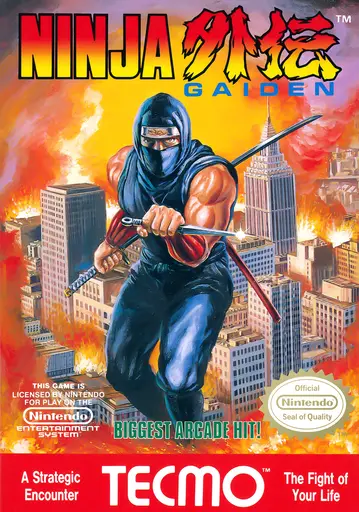
Ninja Gaiden Classic
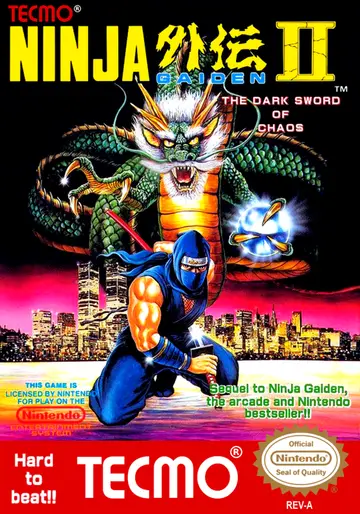
Nintendo Entertainment System · Platformer / Action
Certified classic
| System | Nintendo Entertainment System |
|---|---|
| Released | 1990 |
| Genre | Platformer, Action |
| Developer | Tecmo |
| Publisher | Tecmo |
| Players | 1 player |
| Commitment | An evening or two (Roughly 1–6 hours to see it through) |
| Series | Ninja Gaiden |
| ESRB | E |
| Legacy | Certified classic · legacy score 17 |
Developed by Tecmo, Ninja Gaiden II: The Dark Sword of Chaos arrived on the Nintendo Entertainment System in 1990 as a platformer. Depending on the region, you may also know it as Shadow Warriors II: Ninja Gaiden II. It blends platformer and action elements.
It landed about 5 years into the NES's life. Other notable NES releases from 1990 include Final Fantasy III, Dr. Mario and Mega Man 3. Among the 191 NES platformers in our database, it ranks #13 by legacy score.
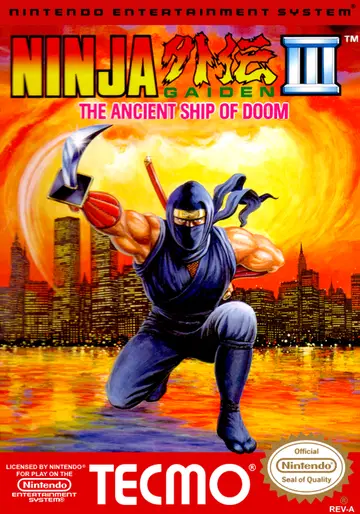
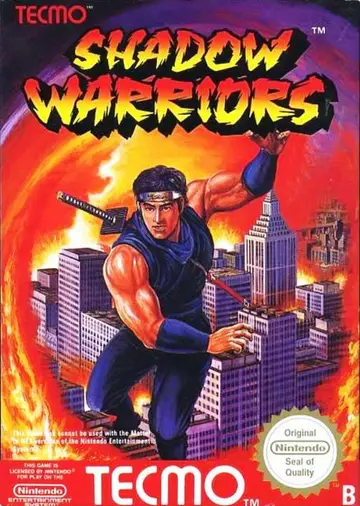
It is part of the Ninja Gaiden series; on the NES you can also try Ninja Gaiden, Ninja Gaiden III: The Ancient Ship of Doom and Shadow Warriors: Ninja Gaiden. The series also appears on other systems with Ninja Gaiden: Dragon Sword (DS) and Ninja Gaiden Shadow (Game Boy). Tecmo also made Rygar, Mighty Bomb Jack and Tecmo Cup Soccer Game for the NES.
Ninja Gaiden II: The Dark Sword of Chaos is a single-player game, so it's one to enjoy at your own pace.
Platformers are all about movement: running, jumping and timing your way across levels full of gaps, enemies and secrets. The best ones feel great to control within seconds and then slowly teach you to master every leap.
Tip for newcomers: Retro platformers often have limited lives and few checkpoints. Learn one level at a time, look for hidden 1-ups, and don't be shy about using a save feature when it is available.
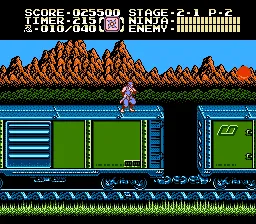
152 codes on file (Game Genie, Other codes). Here are a few Game Genie codes to start with:
| Start With 1 Life | AEKGVTZA |
|---|---|
| Infinite Lives | SXXGXAVG |
| Almost Invincible! | SZNGKGSA |
| Half-Energy From Medicine | LEUOSATA |
| Double Energy From Medicine | GEUOSATE |
| Stop Timer | SXVKLTVG |
Stuck, or want to go deeper? These trusted sites have full walkthroughs, completion times and more for Ninja Gaiden II: The Dark Sword of Chaos.
NES games are short on paper but often famously tough, so expect to replay levels and learn patterns. Many first-party titles are available through Nintendo Switch Online, original cartridges remain easy to find, and you can play backups of games you own in an emulator such as Rec0m88.
Ninja Gaiden II: The Dark Sword of Chaos was released for the Nintendo Entertainment System in 1990.
It was developed by Tecmo.
No. Ninja Gaiden II: The Dark Sword of Chaos is a single-player game.
As a platformer, Ninja Gaiden II: The Dark Sword of Chaos typically falls into the "An evening or two" category: roughly 1–6 hours to see it through. Your time will vary with skill and how much you explore.
Read more about Ninja Gaiden II: The Dark Sword of Chaos on Wikipedia. Facts on this page are compiled from the open libretro database and Wikidata; "legacy score" reflects how widely a game is documented across Wikipedia's language editions. Spotted an error? Let us know.