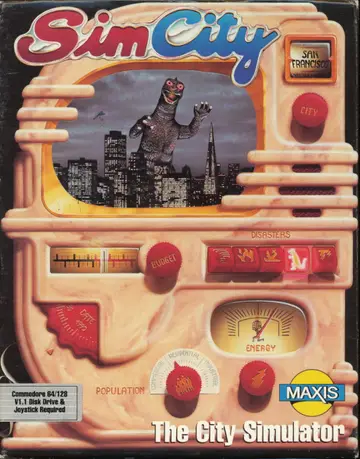
SimCity Classic
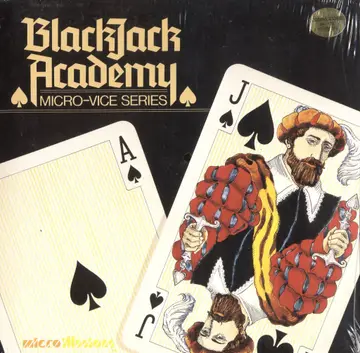
Commodore 64 · Simulation
Deep cut
| System | Commodore 64 |
|---|---|
| Released | 1987 |
| Genre | Simulation |
| Commitment | Quick session (Under an hour, or endless arcade fun) |
| Legacy | Deep cut · legacy score 2 |
BlackJack Academy is a simulation game released in 1987 for the Commodore 64.
It landed about 5 years into the C64's life. Other notable C64 releases from 1987 include The Last Ninja, Gradius and Octapolis. Among the 69 C64 simulation games in our database, it ranks #23 by legacy score.
Simulation games model a system and let you play inside it, whether that means building a city, flying a plane, raising a pet or running a business.
Tip for newcomers: Simulations are often open-ended. Set yourself small goals and enjoy experimenting with the systems.
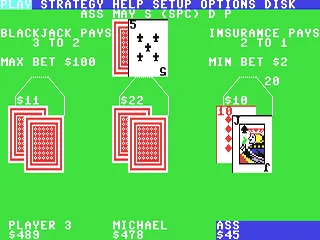
Stuck, or want to go deeper? These trusted sites have full walkthroughs, completion times and more for BlackJack Academy.
C64 games loaded from cassette or floppy disk, and many reward patience and practice. The THEC64 reissues make original-style play easy on modern TVs, and Rec0m88 supports the C64 if you own your games.
BlackJack Academy was released for the Commodore 64 in 1987.
As a simulation game, BlackJack Academy typically falls into the "Quick session" category: under an hour, or endless arcade fun. Your time will vary with skill and how much you explore.
Read more about BlackJack Academy on Wikipedia. Facts on this page are compiled from the open libretro database and Wikidata; "legacy score" reflects how widely a game is documented across Wikipedia's language editions. Spotted an error? Let us know.